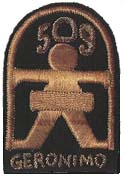
(above picture)509th PIB Patch
509th PIB WW II
Medal
of Honor Recipient
Cpl Paul B Huff

(above picture)550th PIB Crest

(above picture)551st PIB Crest
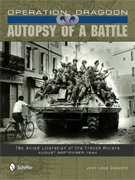
CLICK above to Order
|
Attached Units - The U.S. Airborne during World War II
The First Airborne Task Force
 peration Dragoon, the invasion of Southern France, was conceived in controversy.
Churchill didn't see a need to actually conduct and invasion since thousands of Germans troops were
stationed there in anticipation of an invasion. Instead Churchill advocated a major Allied thrust into
the Balkans. However, Roosevelt's focus was Germany itself. Consequently, President Roosevelt prevailed and the
invasion was set for August 15, 1944. peration Dragoon, the invasion of Southern France, was conceived in controversy.
Churchill didn't see a need to actually conduct and invasion since thousands of Germans troops were
stationed there in anticipation of an invasion. Instead Churchill advocated a major Allied thrust into
the Balkans. However, Roosevelt's focus was Germany itself. Consequently, President Roosevelt prevailed and the
invasion was set for August 15, 1944.
 Lieutenant General Lucian K Truscott, VI Corps Commander, was selected to lead the main thrust of the attack.
It was LG Truscott who had led VI Corps out of the Anzio "meat grinder" and into Rome.
Also attached to General Truscott's corps was the recently activated 1st Airborne Task Force (1st ABTF).
This division-sized unit was activated on July 11, 1944 under the command of MG Robert T Frederick.
(picture right)
The 1st ABTF consisted of the British 2nd Independent Parachute Brigade, the U.S. 509th Parachute Infantry
Battalion (PIB) with the attached 463rd Parachute Field Artillery Battalion, the 517th Parachute Regimental Combat Team (PRCT),
the 550th Glider Infantry Battalion, the 551st Parachute Infantry Battalion.
Lieutenant General Lucian K Truscott, VI Corps Commander, was selected to lead the main thrust of the attack.
It was LG Truscott who had led VI Corps out of the Anzio "meat grinder" and into Rome.
Also attached to General Truscott's corps was the recently activated 1st Airborne Task Force (1st ABTF).
This division-sized unit was activated on July 11, 1944 under the command of MG Robert T Frederick.
(picture right)
The 1st ABTF consisted of the British 2nd Independent Parachute Brigade, the U.S. 509th Parachute Infantry
Battalion (PIB) with the attached 463rd Parachute Field Artillery Battalion, the 517th Parachute Regimental Combat Team (PRCT),
the 550th Glider Infantry Battalion, the 551st Parachute Infantry Battalion.
The 509th PIB had the most combat experience of all the U.S. airborne units.
It fought in French Northwest Africa and saw extensive action in Italy including storming ashore with
the Fifth Army at Anzio. The 517th PRCT, commanded by Colonel Rupert D Graves, was the largest unit assigned
to 1st ABTF. It included the 517th Parachute Infantry Regiment, the 460th Parachute Field Artillery
Battalion and the 596th Airborne Engineer Battalion.
The final plan of the attack ordered the 1st ABTF to jump into the Le Muy area just before dawn
to seize strategic high-ground positions in order to repel German forces attempting to overrun the
assault areas.
In the predawn hours of August 15th the pathfinders were misdropped. However, the skill of the
transport pilots enabled 85% of all the paratroopers to jump directly on their assigned DZ. By that
evening Operation Dragoon was considered a huge success.
After the success of Operation Dragoon the 1st ABTF was assigned to liberate Cannes and Nice, then
to secure strategic montaintop positions in the Maritime Alps along the Franco-Italian border.
The 1st Airborne Task Force was disbanded after Thanskgiving in November, 1944 and its units
moved ot Soissones, France where the warmth of Southern France would soon be replaced by the brutal winter
of the Ardennes.
509th Parachute Infantry Battalion
 he 509th Parachute Infantry Battalion went through several numerical designations
from it's initial activation on October 5, 1941 when it was first designated the 504th Parachute Battalion.
It was redesignated the 2nd Battalion, 503rd Parachute Infantry on February 24, 1942. The final redesignation
came on December 10, 1943 when it was designated the 509th Parachute Infantry Battalion. This was the
designation that it held throughout World War II until its disbandment on March 1, 1945. he 509th Parachute Infantry Battalion went through several numerical designations
from it's initial activation on October 5, 1941 when it was first designated the 504th Parachute Battalion.
It was redesignated the 2nd Battalion, 503rd Parachute Infantry on February 24, 1942. The final redesignation
came on December 10, 1943 when it was designated the 509th Parachute Infantry Battalion. This was the
designation that it held throughout World War II until its disbandment on March 1, 1945.
 Operation Torch was the first joint military action undertaken by the Allies in World War II.
This was the springboard for the Churchillian idea of attacking the soft underbelly of Europe before
attempting a cross-channel attack from England. The main objective was to seize French Northwest Africa.
For political reasons it would be an American led operation under the newly promoted Lieutenant General
Dwight D. Eisenhower. The airborne segment of the operation entailed flying 1500 miles from England to
seize two French airfields near Oran. Major William P Yarborough
(picture left) was selected to plan the logistics of
Operation Torch was the first joint military action undertaken by the Allies in World War II.
This was the springboard for the Churchillian idea of attacking the soft underbelly of Europe before
attempting a cross-channel attack from England. The main objective was to seize French Northwest Africa.
For political reasons it would be an American led operation under the newly promoted Lieutenant General
Dwight D. Eisenhower. The airborne segment of the operation entailed flying 1500 miles from England to
seize two French airfields near Oran. Major William P Yarborough
(picture left) was selected to plan the logistics of
 the airborne phase and the 509th Parachute Infantry Battalion was chosen to execute it under the command
of Lieutenant Colonel (Lt Col) Edson Duncan Raff. Lt Col Raff
(picture right) later was assigned to command the 507th
Parachute Infantry Regiment. The airborne phase of the operation was finally executed on November 8,1942
with disappointing results. As the planes approached the dropzone the French signaled their willingness to
cooperate. However, not all of the French units were informed and there were last minute changes and
decisions that led to confusion. Although Raff's group made the jump, controversy surrounded the operation.
Irregardless, the 509th was undaunted and after a second jump a week later conducted combined operations
with the French against the German Afrika Corps in Tunisia.
the airborne phase and the 509th Parachute Infantry Battalion was chosen to execute it under the command
of Lieutenant Colonel (Lt Col) Edson Duncan Raff. Lt Col Raff
(picture right) later was assigned to command the 507th
Parachute Infantry Regiment. The airborne phase of the operation was finally executed on November 8,1942
with disappointing results. As the planes approached the dropzone the French signaled their willingness to
cooperate. However, not all of the French units were informed and there were last minute changes and
decisions that led to confusion. Although Raff's group made the jump, controversy surrounded the operation.
Irregardless, the 509th was undaunted and after a second jump a week later conducted combined operations
with the French against the German Afrika Corps in Tunisia.
In addition to being the first airborne unit to participate in a combat jump, the 509th saw
extensive action in Italy. The battalion was nearly destroyed when it was misdropped behind German lines
at Salerno but survived to fight as mountain troops and stormed ashore with the Fifth Army at Anzio.
After Anzio the battalion jumped into Southern France as part of the First Airborne Task Force
where they again fought as mountain infantry.
When the order to deactivate the 509th Parachute Infantry Battalion was published by XVIII
Airborne Corps Headquarters on March 1, 1945 there were only a handful of survivors who remained from
it initial inception. These battle-hardened troopers were absorbed by the 82nd Airborne Division for
the remainder of the war.
550th Infantry Airborne Battalion
n July 1, 1941 the 550th Infantry Airborne Battalion was activated at Fort Kobbe
on the Pacific side of the Canal Zone in Panama. It was initially organized to be neither parachute nor
glider trained but rather an air-landing infantry unit based on the German model that was employed during
the air assault on Crete. It was commanded by Lieutenant Colonel Harry M. Melasky and stationed in Panama
because of concerns over an increasing German influence in Central America. However, by mid-1943 the German
influence had diminished and the 550th was redeployed to the United States for extensive glider training.
The 550th Infantry Battalion now redesignated the 550th Glider Infantry Battalion was committed
to Operation Dragoon as part of the 1st Airborne Task Force along with the 517th Regimental Combat Team,
 the 509th Parachute Infantry Battalion and the 551st Parachute Infantry Battalion. Operation Dragoon, the
invasion of Southern France, would be the 550th first combat mission. D-Day for the operation would be August 15,
1944. After the initial success of the operation the battalion continued fighting in the Maritime Alps as
mountain troops.They continued fighting until November, 1944 when the the 1st Airborne Task force was disbanded
and the battalion was moved to Aldbourne, England.
the 509th Parachute Infantry Battalion and the 551st Parachute Infantry Battalion. Operation Dragoon, the
invasion of Southern France, would be the 550th first combat mission. D-Day for the operation would be August 15,
1944. After the initial success of the operation the battalion continued fighting in the Maritime Alps as
mountain troops.They continued fighting until November, 1944 when the the 1st Airborne Task force was disbanded
and the battalion was moved to Aldbourne, England.
(picture above right: Men of the 550th Airborne Infantry Battalion,
Company C, October 1, 1941, under the command of Captain Sachs.
 (^^ Click Picture to Enlarge ^^) ) (^^ Click Picture to Enlarge ^^) )
During the Battle of the Bulge the 550th Glider Infantry Battalion was attached to the 194th
Glider Infantry Regiment of the 17th Airborne Division. In late February, 1945 the 550th Glider Infantry
Battalion and the 193rd Glider Infantry Regiment were consolidated into the 3rd Battalion of the 194th
Glider Infantry Regiment of the 17th Airborne Division.
551th Parachute Infantry Battalion
he 551st Parachute Infantry Battalion was activated on November 1, 1942 in Panama.
It replaced the 501st Parachute Battalion which had been absorbed in the 503rd Parachute Infantry
Regiment.
Ever since France fell to the Germans there was a concern that the French island of Martinique might
assist 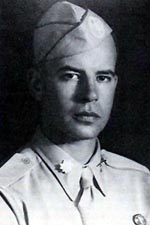 German U-boats in the Atlantic. Plans were drawn up for the 551st to make a surprise attack on
the island and seize it. However, the French commander surrendered and the plan was cancelled. In August, 1943
the 551st was deployed to Camp Mackall, North Carolina where it remained until, March, 1944. The battalion
sailed for Italy and engaged in intensive precombat maneuvers at an airborne training center in Sicily.
Operation Dragoon, the invasion of Southern France, was the battalion's first combat assignment
as part of the 1st Airborne Task Force along with the 517th Regimental Combat Team,
the 509th Parachute Infantry Battalion and the 550th Infantry Airborne Battalion.
German U-boats in the Atlantic. Plans were drawn up for the 551st to make a surprise attack on
the island and seize it. However, the French commander surrendered and the plan was cancelled. In August, 1943
the 551st was deployed to Camp Mackall, North Carolina where it remained until, March, 1944. The battalion
sailed for Italy and engaged in intensive precombat maneuvers at an airborne training center in Sicily.
Operation Dragoon, the invasion of Southern France, was the battalion's first combat assignment
as part of the 1st Airborne Task Force along with the 517th Regimental Combat Team,
the 509th Parachute Infantry Battalion and the 550th Infantry Airborne Battalion.
In Operation Dragoon, the 551st was in continual action from the August 15, 1944 until November 17 1944.
Like the 550th, the 551st also fought in the Maritime Alps as mountain troops. During this time the 551st along with
the 509th and the 550th fought a successful holding action against the Austrian 5th Hocchgebirgesjager
Division protecting the right flank of the U.S. 7th Army. The battalion was relived by the U.S. 100th Infantry
on November 17, 1944. They would barely have enough time to restock their supplies before being thrust
into the middle of the largest battle of World War II.
The 551st Parachute Infantry Battalion entered the Battle of the Bulge on December 21, 1944
and was initially assigned to the 30th Infantry Division reinforcing the 30th positions in and around
Francorchamps, Ster and Stavelot, Belgium. On Christmas Day the battalion was attached to the 82nd
Airborne Division near Rahier, Belgium in support of the 508th PIR. On General Gavin's orders the battalion
executed a reconnaissance in force to capture prisoners and determine the German units in contact. After
considerable close-in combat including repulsing two German couterattacks the 551st withdrew to its original
line of departure. The mission was accomplished.
From January 1st onward intense German artillery fire slowly decimated the battalion as it advanced through the Ardennes Forest in order to consolidate positions west of the Salm River.  During an artillery barrage on January 7, 1945,
the youthful commander, Lt Col Wood C Joerg, (picture above right) was also killed as the battalion
took the town of Rochelinval, Belgium.
He had been the battalion's Commanding Officer since its activation in Panama.
By January 9th the battalion strength was less than a company as they moved to Juslenville, Belgium. Finally,
in March, 1945 the XVIII Airborne Corps reorganized and the 551st Parachute Infantry Battalion was consolidated
into the 82nd Airborne Division.
During an artillery barrage on January 7, 1945,
the youthful commander, Lt Col Wood C Joerg, (picture above right) was also killed as the battalion
took the town of Rochelinval, Belgium.
He had been the battalion's Commanding Officer since its activation in Panama.
By January 9th the battalion strength was less than a company as they moved to Juslenville, Belgium. Finally,
in March, 1945 the XVIII Airborne Corps reorganized and the 551st Parachute Infantry Battalion was consolidated
into the 82nd Airborne Division.
(picture above right: General March present Pvt Milo Huempfner with the Distinguished Service Cross in June, 1945 for his action during the Battle of the Bulge.
(^^ Click Picture to Enlarge ^^) )
( Source: "
Paratroopers" by Gerard M. Devlin)
( Another Source: "
The 551st Parachute Infantry Battalion" by Les Hughes)
551st Parachute Infantry Battalion - Pictures 
- B Company 551st PIB
- Photo of members of B Company - the 551st location unknown (Photo courtesy of Lori Yetter)
- B Company 551st PIB
- Photo of members of B Company - the 551st somewhere in Southern France with Pvt Robert Pierpont and friends (Photo courtesy of Lori Yetter)
- Officers 551st PIB
- Photo of Officers of the 551st Unknown location. They are (left to right) Sitting: Charles Hicks?, Glenn Slucter, Donald Booth, Edward Hartman, Hugh Robinson, Judson Chalkley, Lamar Tavoian, Donald Pay, Rupert Graves,
Bill Holm, John Battenfield, Archibald MacPheeters, Tim Quinn, Oliver Hord, Jim Evans, Bill Smith, Frank Serio.
Standing: Russell Fuller, John Reed, Richard Mascuch, Joe McNair, Robert Workman, Marshall Dalton, Erwin Schroeder,
Rushton Peabody, possibly Ben Brown, Charles Hecq, Leroy Sano, Richard Goins, John Hill, Joseph Farren, John Belcher.
books
R E L A T E D B O O K S
Ambrose, Stephen E D-DAY June 6,1944:
The Climatic Battle of WW II. 6/93, Simon & Shuster ISBN: 0671673343
Annussek, Greg Hitler's Raid to Save Mussolini: The Most Infamous Commando Operation of World War II. Sept 1, 2005, Da Capo Press, 353 pp. ISBN: 0306813963
Archer, Clark Paratroopers
Odyssey : A History of the 517th Parachute Combat Team. 266p., 1985, ISBN: 0961601507
Astor, Gerald 'Battling
Buzzards': The Odyssey of the 517th Parachute Regimental Combat Team 1943-1945. 338p.,
7/93, Donald I Fine Pub, ISBN: 0440236932
Badsey , Stephen & Chandler, David G (Editor)
Arnhem 1944:
Operation "Market Garden" (Campaign No.24) 1993
96p. ISBN: 1855323028
Breuer, William B Geronimo! American
Paratroopers in WWII. New York: St. Martin Press, 1989 621 p. ISBN: 0-312-03350-8
Breuer, William B Operation Dragoon:
The Allied Invasion of the South of France. Presidio Press, Sept 1987 261 p. ISBN: 0891413073
Breuer, William B Unexplained
Mysteries of World War II. John Wiley & Sons, Sept 1998 256 p. ISBN:0471291072
D'Este, Carlo
Patton: A Genius for War 1024 pp ISBN: 0060927623
De Trez, Michel
The Way We Were: "Doc" Daniel B. McIlvoy: Regimental Surgeon, 505 Parachute Infantry Regiment, 82nd Airborne Division (WW II American Paratroopers Portrait Series)
August 20, 2004, D-Day Pub, 167 p. ISBN: 2960017668
De Trez, Michel
Colonel Bob Piper: G Company 505 PIR (WW II American Paratroopers Portrait Series)
March, 2003, D-Day Pub, 48 p. ISBN: 2960017641
De Trez, Michel
At the Point of No Return : Pictorial History of the American Paratroopers in the
Invasion of Normandy 7/98, D-Day Pub, 200 p. ISBN: 2960017617
De Trez, Michel
First Airborne Task Force: Pictorial History of the Allied Paratroopers in the
Invasion of Southern France 7/98, D-Day Pub, 500 p. ISBN: 2960017625
Devlin, Gerard S
Paratrooper! St Martin's Press, (P) c1976 ISBN: 0312596529
Gabel, Kurt The Making of a Paratrooper: Airborne Training and Combat in World War II Univ Press of Kansas (Jan 1990), 282 p. ISBN: 070060409X
Gassend, Jean-Loup Operation Dragoon: Autopsy of a Battle: The Allied Liberation of the French Riviera August-September 1944 Schiffer Publishing, Ltd. (May 28, 2014), 560 p. ISBN: 076434580X
Gavin, James M.
On to Berlin : Battles of an Airborne Commander, 1943-1946 ISBN: 0670525170
Giard, Régis & Frédéric Blais Helmets of the ETO: A Historical & Technical Guide Histoire & Collections (Jan 2008), 216 p. ISBN: 2352500621
Golden, Lewis Echoes From Arnhem Penguin
ISBN: 0718305213
Hicks, Anne The Last Fighting General: The Biography of Robert Tryon Frederick Schiffer Pub Ltd, 320pp, ISBN: 0764324306
Inglesby, Leo C A Corporal Once Xlibris
2/2/2001, 108 p. ISBN: 0738838209
Jankowiak, Loic 517th Gang. 2/20, 248 pages (Hardcover)
Jankowiak, Loic Aly Daly and his 140 Thieves (596 AEC). 224 pages (Hardcover)
Kershaw, Alex The Longest Winter: The Battle of the Bulge and the Epic Story of WWII's Most Decorated Platoon
Da Capo Press, 288 pp November 30, 2004 ISBN: 0306813041
Kormann, John G Echoes of a Distant Clarion: Recollections of a Diplomat and Soldier Vellum
(P), 520 p. ISBN: 0979448832
MacDonald, Charles B A Time For
Trumpets: The Untold Story of the Battle of the Bulge Wm Morrow & Co
(P), 720 p. ISBN: 068151574
McKenzie, John
On Time, On Target Novato, CA: Presidio, May 15,2000. 304 p. ISBN: 089 141 714 1
Morgan, John Daniel
The Left Corner of My Heart : The Saga of the 551st Parachute Infantry Battalion Alder Enterprise, 1984. 548 p.
Orafalea, Gregory
Messengers of the Lost Battalion : The Heroic 551st and the Turning of the Tide at the Battle of the Bulge Free Press, March 14,1997. 432 p. ISBN: 068 482 804 9
Ryan, Cornelius
A Bridge Too Far 670p. ISBN: 0684803305
van Lunteren, Frank Blocking Kampfgruppe Peiper: The 504th Parachute Infantry Regiment in the Battle of the Bulge Casemate, Sept 19,2015. 368 p. ISBN: 1612003133
van Lunteren, Frank The Battle of Bridges: The 504th Parachute Infantry Regiment in Operation Market Garden Casemate, June 1,2014. 336 p. ISBN: 1612002323
van Lunteren, Frank Spearhead of the Fifth Army: The 504th Parachute Infantry Regiment in Italy from the Winter Line To Anzio Casemate, Sept 16,2016. 320 p. ISBN: 161200427X
Wildman, John B All Americans 82nd
Airborne. Meadowlands Militaria, 6/83 ISBN:091 208 1007
The Center of Military History The War in the Mediterranean: A WWII Pictorial History Brasseys, Inc.,
465 p. ISBN:1574881302
Yardley, Doyle R
Home Was Never Like This. Yardley Enterprises, Aug, 2002, 312 p. ISBN:0971743908
|