502nd PIR WW II Distinguished Service Cross(DSC) RecipientsLt Col Patrick F Cassidy Lt Col Steve A Chappius Pfc William Conklin 1/Lt George H Craft Capt Fred O Drennan 1/Lt George M Eberle Pfc William Evans Pfc Frank Garofano 1/Lt Ernest O Harris Sgt Bailey Harrison Pfc Fred S Jones Jr Capt Frank L Lillyman Pfc Floyd P Marquart 1/Sgt Hubert Odom 1/Lt Robert C Pick Capt St Julien Rosemond T/4 Jack Rudd 1/Sgt Kenneth N Sprecher Lt Col John P Stopka 2/Lt Harrison C Summers
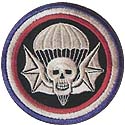
The 502nd Parachute Infantry Regiment Unit History
lthough the airborne assault on Crete on 20 May 1941 sounded the death knell for the German airborne, the American military planners were oblivious to the unacceptably high casualty rate suffered by the Germans. Instead, they focused on the tactical and strategic successes of the operation noting that Crete had been captured entirely by an airborne force.
Consequently, the Army accelerated its plans to organize and activate additional airborne units. On 1 July 1941,
the 502nd Parachute Infantry Battalion was quickly activated at Fort Benning, GA under the command of
Major George P Howell Jr, the former Executive Officer of the 501st Parachute Infantry Battalion. The unit
was initially comprised of a small detachment taken from two companies of the 501st.
December 7,1941, "a day that will live in infamy", again prompted an acceleration
of airborne planning and strategy. On 30 January 1942 the War Department hurriedly authorized the activation of
four Army parachute regiments. A month later, on 2 March 1942, the 502nd Parachute Infantry Regiment (PIR)
was activated at Fort Benning, GA from the 502nd Parachute Infantry Battalion. Howell was promoted to
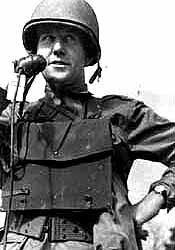
Colonel but left that same month to command the parachute school at Fort Bragg, NC. He passed the regiment's command
to Col George Van Horn Moseley Jr. (picture right)
who came from a long line of West Point graduates. Like the other airborne regimental commanders of his day, Col
Moseley made enormous demands on his troops as well as himself.
In July of 1942 the activation of two full airborne divisions the 82nd
and 101st was ordered and the 502nd was assigned as a permanent unit of the 101st Airborne Division. Shortly after they became part of the 101st the 502nd PIR moved from Fort Benning GA to join the rest of the division, at Fort Bragg NC. Throughout the rest of 1942 and into 1943 the 502nd PIR took part in a grueling training program, which consisted of individual, unit, and combined division training. During March of 1943 they took part in division maneuvers in Southern Pines. This was followed by the Camden maneuvers which started on May 23rd of that year. Shortly after the Camden Maneuvers the big Tennessee maneuvers were held.
On September 4 1943 men of the 502nd boarded the SS. Strathnaver bound
for their new home in England. The Strathnaver sailed for 6 days before she had to make port on September 11 in St. Johns Newfoundland for repairs. The journey eventually would end up taking a total of 44 days because of the discovery of salt water in the ships fresh water tanks and other non-related mishaps. On October 4th the SS John Ericsson picked the men up and finally set sail for England arriving in Liverpool on October 18th. They settled into quarters in the Chilton Foliat and Denford near Hungerford, Berkshire which would be their new home for the next seven months. The Five-O-Deuce's troopers continued their rigorous training which included 15-25 mile hikes
and daily close combat exercises. Instructions were given in a wide variety of items from 1st-aid, map reading, chemical warfare and the use and firing of German weapons. Company and battalion size parachute drops where also rehearsed during this period.
Normandy - D-Day Flying out of Membury and Greenham Common in the first wave to depart, the 502nd PIR headed for drop zone (DZ)A. Their mission was to secure two northern causeways leading inland from Utah Beach and destroy a German coast-artillery battery (122 mm Howitzer)near Ste Martin-de-Varreville. In the predawn hours of D-Day a combination of low clouds, and enemy anti-aircraft
fire caused the break-up of the troop carrier formations.
The scattering of the air armada was such that some troopers jumped while still over the English Channel and drown. Consequently, the sporadic jump patterns caused most of Col Moseley's battalions
to land far afield of their designated DZ. Some of the sticks landed as far away as 5
miles from the designated area. Unfortunately during the drop Col Moseley broke his
leg and had to relinquish command to his Executive Officer, Lt Col John H Michaelis (picture left)
. Meanwhile, the 3rd Battalion led by Lt Col Robert G Cole was responsible for securing the two causeways. Undaunted by the confusion, Lt Col Cole gradually collected his men and achieved his objective.
The rest of June found the airborne troops fighting as infantry. After regrouping the
101st received the new objective of seizing the city of Carentan. It was during this
operation that Lt Col Robert Cole (picture right)
received the Medal of Honor for leading his battalion in a fix
bayonet charge on the Ingouf farm house, a German stronghold defending one of the bridges over the
Carentan Causeway. His Executive Officer, Maj John P Stopka, led the charge on Cole's left and
received the Distinguished Service Cross (DSC). Lt Col Cole never got the chance to wear it since
he was killed by a snipers bullet 3 months later in Holland. Maj Stopka was killed two weeks after
receiving his medal at Bastogne.
On 29 June the 101st was relieved from the VIII Corps and sent to Cherbourg to relieve the 4th Infantry Division. The 502nd PIR returned to England shortly thereafter for rest and training. At about the same time General Eisenhower called for a headquarters that would oversee the Allies' airborne troops. In August 1944 he established the First Allied Airborne Army, controlling elements of the American and British (and Polish) Armies. Concurrently,the 17th, 82nd and 101st Airborne Divisions were assigned to the newly created U.S. XVIII Airborne Corps under the command of Gen Matthew Ridgway. The new army was put to the test in September 1944 during the Allied thrust in northern Europe: Operation Market-Garden.
(picture above left: General Omar Bradley conferring the Distinguished Service Cross (DSC) on T/4 Jack Rudd (Company B) for his action during the Normandy Campaign.
(^^ Click Picture to Enlarge ^^) )
Operation Market Garden
This was an audacious plan concocted by British Field Marshal Montgomery
that would be the first major daylight air assault attempted by a military power since Germany's attack
on Crete. Similar to the Germans assault of four years earlier, the Allies initial plan for
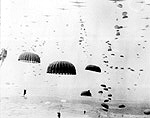
September 17,1944 was to use the paratroopers and glidermen of the 82nd and 101st U.S. Airborne Divisions and England's First Airborne Division in a daring daylight drop into
Holland. The airborne Allied troops were to seize roads, bridges and the key communication cities of
Eindhoven, Nijmegen and Arnhem, thus cutting Holland in half and clearing a corridor for British
armoured and motorized columns all the way to the German border.
The 101st mission was to secure the fifteen miles of Hell's Highway stretching
from Eindhoven north to Veghel. After less than three months in England, the 502nd was
to make its second combat jump. Still under the command of Col Michaelis the unit was to land in
Holland on DZ C, seize the small highway bridge over the Dommel River north of Saint Oedenrode and
the railroad and road bridges at Best. The 502nd was also given the mission of guarding
DZs B & C for the subsequent glider landings. Shortly after 1315 hours on the afternoon of 17
September 1944, after a n uneventful daylight drop, the men of the 502nd gathered up
and headed for their objectives.
First Battalion went north to capture the little town of St Oedenrode. Third Battalion sent patrols through the
Zonsche forest, trying to move toward the town of Best and the bridge. German resistance was tough
in the vicinity of Best but the 502nd fought their way to within 100 yards of the bridge
before the Germans blew it up. In fierce fighting around the bridge, Private Joe Mann
(picture right) who was seriously
wounded twice during the fighting, was killed when he threw himself on a German grenade to save his
fellow soldiers who were in the same foxhole with him. Mann was posthumously awarded the Medal of
Honor for this act of selfless heroism. Ironically, the only other Medal of Honor recipient of
101st during the war, Col. Robert Cole, was shot and killed by a snipers bullet in the
action around the Zonsche Forest. The fate of the third battalion was now in the capable hands of
its executive officer Maj. John Stopka. On 22 September, Lt Col Michaelis and three of his staff
were seriously wounded by an artillery shell outside of his headquarters. Command of the
502nd passed to 2nd Battalion commander, Steve Chappuis.
After securing their hard-won objectives, the men of the 502nd moved north with the rest of the 101st to take hold of defensive positions on 'The Island', south west of Arnhem. It was here that the 101st would fight some of its toughest battles during its time in Holland.
The Ardennes - Battle of the Bulge On 16 December, 1944, The Germans had launched a major offensive at dawn on 16 December, west through the Ardennes Forest, in the lightly held sector of our VII Corps. Their goal was the port town of Antwerp
where they hoped to choke off the allied supply lines. At that time Shaef's Reserve consisted of the 101st and 82nd Airborne Divisions. The 101st was ordered to the vitally important town of Bastogne which was the key to the German counteroffensive. From Bastogne radiated several roads that were essential to the German juggernaut. The 101st was jammed into trucks for an overnight rush to Bastogne in Belgium on Dec. 18th. The defense of Bastogne by the 101st presented a formidable obstacle to the surging Fifth Panzer Army of Hasso von Manteuffel. In the ensuing days the encircled 101st engaged in vicious fighting. The 502nd held positions on the north and northwest portion of the envelopment.
After the Germans had failed to break through in other sections of the circle, they sent probes, which attempted to penetrate the areas defended by the 502nd. Without appropriate look outs or the use of such modern day equipment as security cameras, the squad was somewhat vulnerable. In an attack that took place on Christmas morning in the Hemroulle area of Belgium, numerous German tanks penetrated the line. Simultaneously farther north strong German infantry elements infiltrated the town of Champs. Two of the German tanks which drove north from Hemroulle attempted to bypass the 502 Regimental C.P. at the Rolle Chateau. In this attack Sky Jackson of the 502nd received the Silver Star for single handedly hitting the two tanks with bazooka fire knocking out one. The other tank escaped only to be destroyed at Champs by another 502nd member John Ballard of A Company who was
killed on January 3 1945 in another action. Finally, on December 26th Patton's 4th Armor Division broke through the encirclement and the lifting of the siege of Bastogne began.
On 3 January 1945 the 2nd Battalion engaged in heavy fighting around Longchamps, Belgium. The Germans pressed forward and as many as forty jumpers, mostly from F company, were rounded up and taken prisoner that day. On January 14, 1945 3rd Battalion 502 would again suffer the loss of its commander. Lieutenant Col. John Stopka and some of his troopers were advancing through a pine forest along an elevated
rail line. Enemy Tanks were advancing along the other side. Someone called in for air support and the planes strafed too close to the friendly positions, resulting in the death of Col. Stopka and thirty other soldiers near Michamps.
With that unfortunate incident, the command of the 3rd Battalion was given to Cecil L Simmons who would lead the unit until the end of the war.
The 101st Airborne held a line along the Moder River for over a month as part of the US 7th Army. On 23 February, the Screaming Eagles were relieved and returned to Mourmelon, France. Here General Eisenhower spoke to the 101st Airborne Division when the unit was awarded
the Distinguished Unit Citation for its stand at Bastogne. This was the first time in the history of the United States Amy that an entire Division had been so honored.
As the war in Europe was nearing its end,the 502nd moved to the Ruhr Pocket on 2 April to help in mop-up operations. Here the 502nd went on the line facing the Rhine River south of Dusseldorf, Germany. On the 4th and 5th of May, the 502nd received and carried out its final wartime mission - the capture of Berchtesgaden, Hitler's Eagles Nest.
The 502nd spent the summer of 1945 on occupation duty near Mittersill, Austria. Returning to France in September, the soldiers continued waiting for transport stateside. The 101st Airborne Division was deactivated in December of 1945.
( Sources: "
Paratroopers" by Gerard M. Devlin & Deuces Are Wild, The 502nd Parachute Infantry Regiment in WW II.)
502nd Parachute Infantry Regiment - Pictures
Company A - 1st Battalion
- Photo of members of Company A 1st Battalion - 502nd PIR. Camp Coserne, France post D-Day (Photo
courtesy of Troy Danks)
Company C - 1st Battalion
- Photo of members of Company C - 1st Battalion - 502nd PIR. Somewhere in England 1944.
Headquarters Co. 2nd Battalion
- Photo of members of Headquarters Co. 2nd Battalion - 502nd PIR. Hungerford England 1944. (Photo
courtesy of
Mary Ann Nichols)
Company H 3rd Battalion
- Photo of members of Company H 3rd Battalion - 502nd PIR. Fort Bragg circa 1943 (Photo
courtesy of Cassandra Vaughan)
D-Day Pathfinders
- Photo of members of the 1st Stick of D-Day Pathfinders - 502nd PIR (Capt Lillyman's Stick). 1st Lt Reed Pelfrey is kneeling in the front row extreme-left. (Photo
courtesy of
Gordon Stewart: WW II Airborne Demonstration Team)
502 Training Group
- Photo of members of the 502nd PIR Training Group 2 at Ft. Benning from July 28, 1941. (Photo
courtesy of
Pat Schilling)
502 Training Accident - 1942
- List of members of the 502nd PIB who perished while on a Training Mission from Pope Field, NC on august 15, 1942.






 lthough the airborne assault on Crete on 20 May 1941 sounded the death knell for the German airborne, the American military planners were oblivious to the unacceptably high casualty rate suffered by the Germans. Instead, they focused on the tactical and strategic successes of the operation noting that Crete had been captured entirely by an airborne force.
 December 7,1941, "a day that will live in infamy", again prompted an acceleration
of airborne planning and strategy. On 30 January 1942 the War Department hurriedly authorized the activation of
four Army parachute regiments. A month later, on 2 March 1942, the 502nd Parachute Infantry Regiment (PIR)
was activated at Fort Benning, GA from the 502nd Parachute Infantry Battalion. Howell was promoted to
Colonel but left that same month to command the parachute school at Fort Bragg, NC. He passed the regiment's command
to Col George Van Horn Moseley Jr.
December 7,1941, "a day that will live in infamy", again prompted an acceleration
of airborne planning and strategy. On 30 January 1942 the War Department hurriedly authorized the activation of
four Army parachute regiments. A month later, on 2 March 1942, the 502nd Parachute Infantry Regiment (PIR)
was activated at Fort Benning, GA from the 502nd Parachute Infantry Battalion. Howell was promoted to
Colonel but left that same month to command the parachute school at Fort Bragg, NC. He passed the regiment's command
to Col George Van Horn Moseley Jr. 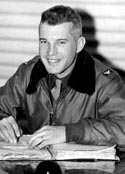 The scattering of the air armada was such that some troopers jumped while still over the English Channel and drown. Consequently, the sporadic jump patterns caused most of Col Moseley's battalions
to land far afield of their designated DZ. Some of the sticks landed as far away as 5
miles from the designated area. Unfortunately during the drop Col Moseley broke his
leg and had to relinquish command to his Executive Officer, Lt Col John H Michaelis
The scattering of the air armada was such that some troopers jumped while still over the English Channel and drown. Consequently, the sporadic jump patterns caused most of Col Moseley's battalions
to land far afield of their designated DZ. Some of the sticks landed as far away as 5
miles from the designated area. Unfortunately during the drop Col Moseley broke his
leg and had to relinquish command to his Executive Officer, Lt Col John H Michaelis 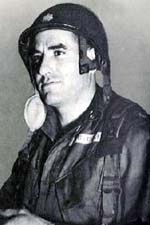 The rest of June found the airborne troops fighting as infantry. After regrouping the
101st received the new objective of seizing the city of Carentan. It was during this
operation that Lt Col Robert Cole
The rest of June found the airborne troops fighting as infantry. After regrouping the
101st received the new objective of seizing the city of Carentan. It was during this
operation that Lt Col Robert Cole 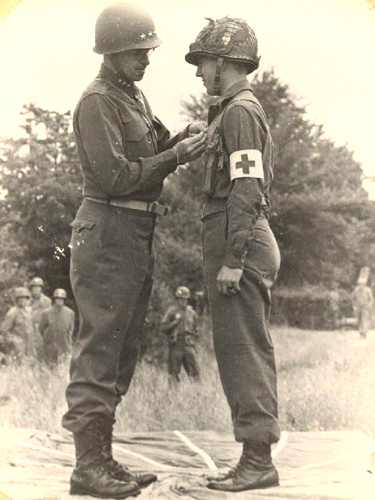
 (^^ Click Picture to Enlarge ^^)
 This was an audacious plan concocted by British Field Marshal Montgomery
that would be the first major daylight air assault attempted by a military power since Germany's attack
on Crete. Similar to the Germans assault of four years earlier, the Allies initial plan for
September 17,1944 was to use the paratroopers and glidermen of the 82nd and 101st U.S. Airborne Divisions and England's First Airborne Division in a daring daylight drop into
Holland. The airborne Allied troops were to seize roads, bridges and the key communication cities of
Eindhoven, Nijmegen and Arnhem, thus cutting Holland in half and clearing a corridor for British
armoured and motorized columns all the way to the German border.
This was an audacious plan concocted by British Field Marshal Montgomery
that would be the first major daylight air assault attempted by a military power since Germany's attack
on Crete. Similar to the Germans assault of four years earlier, the Allies initial plan for
September 17,1944 was to use the paratroopers and glidermen of the 82nd and 101st U.S. Airborne Divisions and England's First Airborne Division in a daring daylight drop into
Holland. The airborne Allied troops were to seize roads, bridges and the key communication cities of
Eindhoven, Nijmegen and Arnhem, thus cutting Holland in half and clearing a corridor for British
armoured and motorized columns all the way to the German border.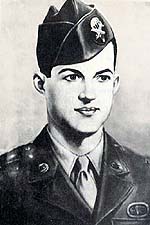 First Battalion went north to capture the little town of St Oedenrode. Third Battalion sent patrols through the
Zonsche forest, trying to move toward the town of Best and the bridge. German resistance was tough
in the vicinity of Best but the 502nd fought their way to within 100 yards of the bridge
before the Germans blew it up. In fierce fighting around the bridge, Private Joe Mann
First Battalion went north to capture the little town of St Oedenrode. Third Battalion sent patrols through the
Zonsche forest, trying to move toward the town of Best and the bridge. German resistance was tough
in the vicinity of Best but the 502nd fought their way to within 100 yards of the bridge
before the Germans blew it up. In fierce fighting around the bridge, Private Joe Mann
