
(above insignia)88th GIR Patch
R E S O U C E
S I T E S
Find a Grave
Bangor Public Library
|
88th Glider Infantry Regiment
Unit History
 he 88th Infantry Airborne Battalion was activated at Fort Benning, Georgia on 10 October 1941.
General Marshall ordered its formation because of the impressive results of the Panama Maneuvers involving the 550th
Infantry Airborne Battalion with Company C, 501st Parachute Battalion attached. Its original cadre included 27 officers,
500 enlisted men and was commanded by Lt Colonel Eldridge G Chapman who would later go on to command the 13th Airborne
Division. he 88th Infantry Airborne Battalion was activated at Fort Benning, Georgia on 10 October 1941.
General Marshall ordered its formation because of the impressive results of the Panama Maneuvers involving the 550th
Infantry Airborne Battalion with Company C, 501st Parachute Battalion attached. Its original cadre included 27 officers,
500 enlisted men and was commanded by Lt Colonel Eldridge G Chapman who would later go on to command the 13th Airborne
Division.
During the next 6 months the 88th was used for testing and experimentation of new methods
of loading men and securing equipment for Airborne missions. The results of this experimentation helped influence
the layout designs of troop transports and gliders still under development.
In April, 1942 the 88th was expanded to full battalion strength of 1000 men. Colonel Robert C. Aloe
assumed command replacing Colonel Chapman who was promoted to General Lee's Executive Officer in Airborne Command.
The next month the battalion changed stations from Fort Benning, Georgia to Fort Bragg, North Carolina.
In June, 1942, the 88th was reorganized and expanded into the 88th Glider Infantry Regiment.
Since no gliders were available yet the mission of the 88th was to refine air-landing techniques and instruct these techniques
to several infantry divisions. Airborne Training Instructional Teams were created for this purpose using Colonel
Gavin's "Instructional Pamphlet for Airborne Operations" extensively.
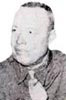 Colonel Joseph Hinton (picture right) replaced Colonel Aloe in December, 1942 and began studying advanced glider techniques.
In April, 1943 the 88th was assigned to the First Airborne Infantry Brigade along with the 326th Glider Infantry Regiment
and the 507th Parachute Infantry Regiment. After participating in several maneuvers, the 88th returned to Fort, Bragg, NC
and joined the newly formed 13th Airborne Division on the first of December 1943.
Colonel Joseph Hinton (picture right) replaced Colonel Aloe in December, 1942 and began studying advanced glider techniques.
In April, 1943 the 88th was assigned to the First Airborne Infantry Brigade along with the 326th Glider Infantry Regiment
and the 507th Parachute Infantry Regiment. After participating in several maneuvers, the 88th returned to Fort, Bragg, NC
and joined the newly formed 13th Airborne Division on the first of December 1943.
Colonel Samuel Roth, who had just returned from the North African Campaign,
assumed command of the 88th in April, 1944. On the 13th of January 1945, the 88th moved from Camp Mackall NC to Camp Shanks, NY for
overseas deployment. Six days later the 88th GIR arrived by train to New York and embarked onto the U.S.A.T.
George Washington, a converted German luxury liner. Both regiments landed in Le Harve, France on February 6th. On that same day the regiments were
packed into 40 and 8s bound for the staging area called Camp Lucky Strike.
On March 1, 1945 a reorganization occurred and the 88th GIR was incorporated into the 326th
thus forming one Glider Infantry Regiment of 3 battalions. During this time the 13th Airborne Division was alerted
several times for possible operations, however each time the fast moving Army ground forces preempted the need for
an airborne operation.
After the German surrender on May 7, 1945 the 13th and 101st Airborne Divisions were notified
of their reassignment to the Pacific. However, the dropping of the atomic bombs on Japan in August, 1945
again dashed the 326th's chance to prove themselves. That same month the regiment was
shipped home aboard two overcrowded Victory ships, the Cranston Victory and the Georgetown Victory.
The 326th GIR arrived in New York Harbor on August 27th and was deactivated soon after at Camp Kilmer, NJ.
88th Glider Infantry Regiment - Pictures 
books
R E L A T E D B O O K S
Ambrose, Stephen E D-DAY June 6,1944:
The Climatic Battle of WW II. 6/93, Simon & Shuster ISBN: 0671673343
Badsey , Stephen & Chandler, David G (Editor)
Arnhem 1944:
Operation "Market Garden" (Campaign No.24) 1993
96p. ISBN: 1855323028
Breuer, William B Geronimo! American
Paratroopers in WWII. New York: St. Martin Press, 1989 621 p. ISBN: 0-312-03350-8
Breuer, William B Drop Zone Sicily:
Allied Airborne Strike,July 1943. Novato, CA: Presidio, c1983. 212 p. ISBN: 089 141 1968
Burriss, T Moffatt
Strike and Hold: A Memoir of the 82nd Airborne in WW II Brasseys, Inc, 256 pp August,2000 ISBN: 1574882589
D'Este, Carlonbsp;
Decision in Normandy William S Konnecky Assc(P), 560 p. ISBN: 1568522606
D'Este, Carlo
Patton: A Genius for War 1024 pp ISBN: 0060927623
De Trez, Michel
At the Point of No Return : Pictorial History of the American Paratroopers in the
Invasion of Normandy 7/98, D-Day Pub, 200 p. ISBN: 2960017617
Falerios, Kenton J.
Give Me Something I Can't Do: The History of the 82nd Military Police Company, WW 1 to Iraq
Nov 2007, Authorhouse, 192 p ISBN: 1434337197
Gavin, James M.
On to Berlin : Battles of an Airborne Commander, 1943-1946 ISBN: 0670525170
Golden, Lewis Echoes From Arnhem Penguin
ISBN: 0718305213
MacDonald, Charles B A Time For
Trumpets: The Untold Story of the Battle of the Bulge Wm Morrow & Co
(P), 720 p. ISBN: 068151574
McKenzie, John
On Time, On Target Novato, CA: Presidio, May 15,2000. 304 p. ISBN: 089 141 714 1
Megallas , James All the Way to Berlin:
A Paratrooper at War in Europe 336p., Presidio Press, March, 2003. ISBN: 0891417842
Nigl, Dr Alfred J & Charles A Nigl
Silent Wings - Savage Death Santa Ana, CA: Graphic Publishing, Dec 3,2007. 288 p. ISBN: 1882824318
Nordyke , Phil All American All the Way: Combat History of the 82nd Airborne Division in World War II Zenith Press, April 2005. 880 pgs ISBN: 0760322015
Ospital, John
We Wore Jump Boots and Baggy Pants Willow House, 1977. 118 p. ISBN: 0912450150
Ruggero, Ed
Combat Jump: The Young Men who Led the Assault into Fortress Europe, July, 1943
HarperCollins, 10/21/2003. 388 p. ISBN: 0060088753
Ryan, Cornelius The Longest Day
Touchstone Books (P), 350 p. ISBN: 0671890913
Ryan, Cornelius
A Bridge Too Far 670p. ISBN: 0684803305
Tucker, William H.
Parachute Soldier: From the Diary of William H. Tucker, 1942-1945 ISBN:1884540015
Tucker, William H.
"Rendez-vous at Rochelinval" Battle of the Bulge International Airborne Books,Harwichport, MS, ISBN:0-9647683-2-1
Wildman, John B All Americans 82nd
Airborne. Meadowlands Militaria, 6/83 ISBN:091 208 1007
The Center of Military History The War in the Mediterranean: A WWII Pictorial History Brasseys, Inc.,
465 p. ISBN:1574881302
|


